
Surprisingly Useful AI Article Enhancements
The rapid rise of Ai in recent years has marked a significant turning point for small and medium-sized businesses. Once out of reach, advanced tools are now widely accessible, helping teams work more efficiently, uncover insights faster and deliver increasingly tailored experiences to their customers. Twilio’s recent State of Customer Engagement report reflects this shift: almost all (97 per cent) Australian companies surveyed say Ai is improving customer-facing operations such as support, marketing and personalisation. Businesses are also already reporting positive outcomes from using Ai to personalise customer experiences, including higher customer spending and greater customer retention.
Of course this is great news. But amid this progress, something crucial is being overlooked – the customer’s voice. Most consumers don’t feel any more understood by brands than they did a year ago. While 79 per cent of Australian businesses claim to deeply understand their customers, only 27 per cent of consumers feel understood by the brands they interact with, down significantly from 46 per cent in 2024. If Ai is supposed to bring brands closer to their customers, why is this gap growing?
Our research, conducted with 7,640 consumers and 637 business leaders across 18 countries, showed a growing disconnect between business perception and customer reality – a gap companies must close to earn trust, drive loyalty and fuel long-term growth. Here are three key learnings from the report that SMEs should be aware of to close the Ai customer experience gap.
1. Consumers Must Feel Ai Benefits Too
Too often, brands focus on what Ai can do for them – automating support, saving time, organising data and improving employee efficiency. But the more important question is: how does it benefit the customer?
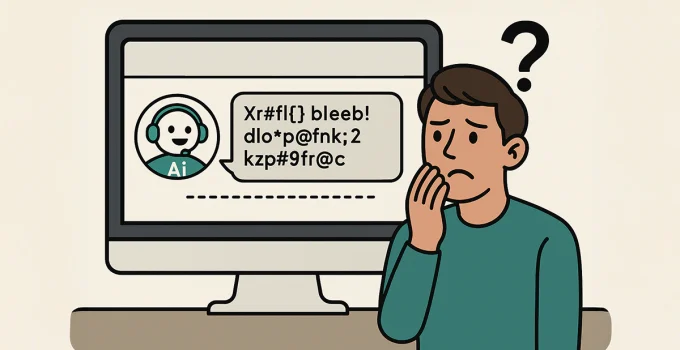
Let’s take Ai chatbots, for example. When done well, they can reduce wait times and help customers resolve issues quickly. But when poorly executed – offering generic responses or failing to solve problems – they leave customers feeling stuck and unsupported.
Our research shows that while two-thirds of Australian consumers say they’re fatigued by Ai, many are still optimistic about its potential when it works for them such as helping them find products (46 per cent), resolving customer service issues more quickly (43 per cent) and providing round-the-clock customer support (35 per cent).
2. Human Interaction And Transparency In Ai Remain Pivotal
Ai may be evolving, but the desire for human connection and control hasn’t gone away. If anything, it’s growing stronger. In Australia, 61 per cent of consumers say it is important for Ai-powered brand interactions to feel as though they come from a human. Consumers are also not ready to completely rule human agents out of the equation just yet. More than half (56 per cent) still prefer to speak with a human agent if Ai fails to resolve their issue effectively.
Transparency also matters. Nearly two-thirds (62 per cent) of consumers want to know when they’re engaging with Ai, and a striking 85 per cent want to decide how brands communicate with them, rather than having Ai agents automatically assume their preference. This reflects a strong desire to retain control and autonomy over their brand interactions.
Australian online car loan marketplace, Driva, provides a great example of Ai being used to automate some customer interactions, while still allowing consumers the autonomy to talk with a human agent. Driva built an intelligent Ai chatbot in under two weeks, enabling it to offer a faster, more personalised service for customers. It also scaled support to meet growing demand, boosted agent efficiency and increased loan applicant conversion rates. But critically, they didn’t eliminate the human option. Customers could still choose to speak with a person, reinforcing trust and control.
3. Ai-Powered Personalisation No Longer A Luxury
Businesses are quickly realising that Ai is the only way to scale customer personalisation and relevance with speed, but most haven’t cracked the code just yet. While 95 per cent of Australian businesses say their Ai personalisation efforts are successful, only 5 per cent of local consumers describe these experiences as “excellent,” with 39 per cent calling them “good” and 40 per cent labelling them “average.”
For businesses that succeed in their Ai personalisation efforts, the rewards are huge. Our research showed that 39 per cent of Australian customers are willing to spend more when brands tailor engagement, 39 per cent make repeat purchases and 34 per cent recommend brands to family and friends. The real differentiator? Pairing real-time data with customer context. When brands understand not just what a customer is doing but why, they can deliver the kind of hyper-relevant experiences that truly feel personal – not programmed.
The biggest takeaways for SMEs looking to use Ai to enhance customer experiences? Consumers aren’t anti-Ai – they’re just asking brands to use it more responsibly. Consumers don’t want more Ai – they want better Ai that delivers personalisation benefits, transparency and always offers a human backup.
Sam Richardson is Director Of Executive Engagement at Twilio.
Last Updated on July 28, 2025 by Sam Richardson


